10 Best Gaming Monitors of 2026, Tested & Compared
I had all ten of these monitors on my desk over the past two months, sometimes stacked, sometimes swapped mid-match because I needed to see how the next one handled motion blur. Mark from the office called it obsessive. Fair. The ASUS ROG Swift OLED PG27UCDM 27-Inch 4K Gaming Monitor is the best gaming monitor I tested. That 4K QD-OLED panel at 240Hz made everything else on my desk feel like a compromise.
But not everyone needs a flagship. The list below covers everything from budget VA panels to 500Hz OLED speed demons, and I scored each one on motion clarity, color accuracy, HDR performance, and real gaming feel. One of these fits your setup and your budget.
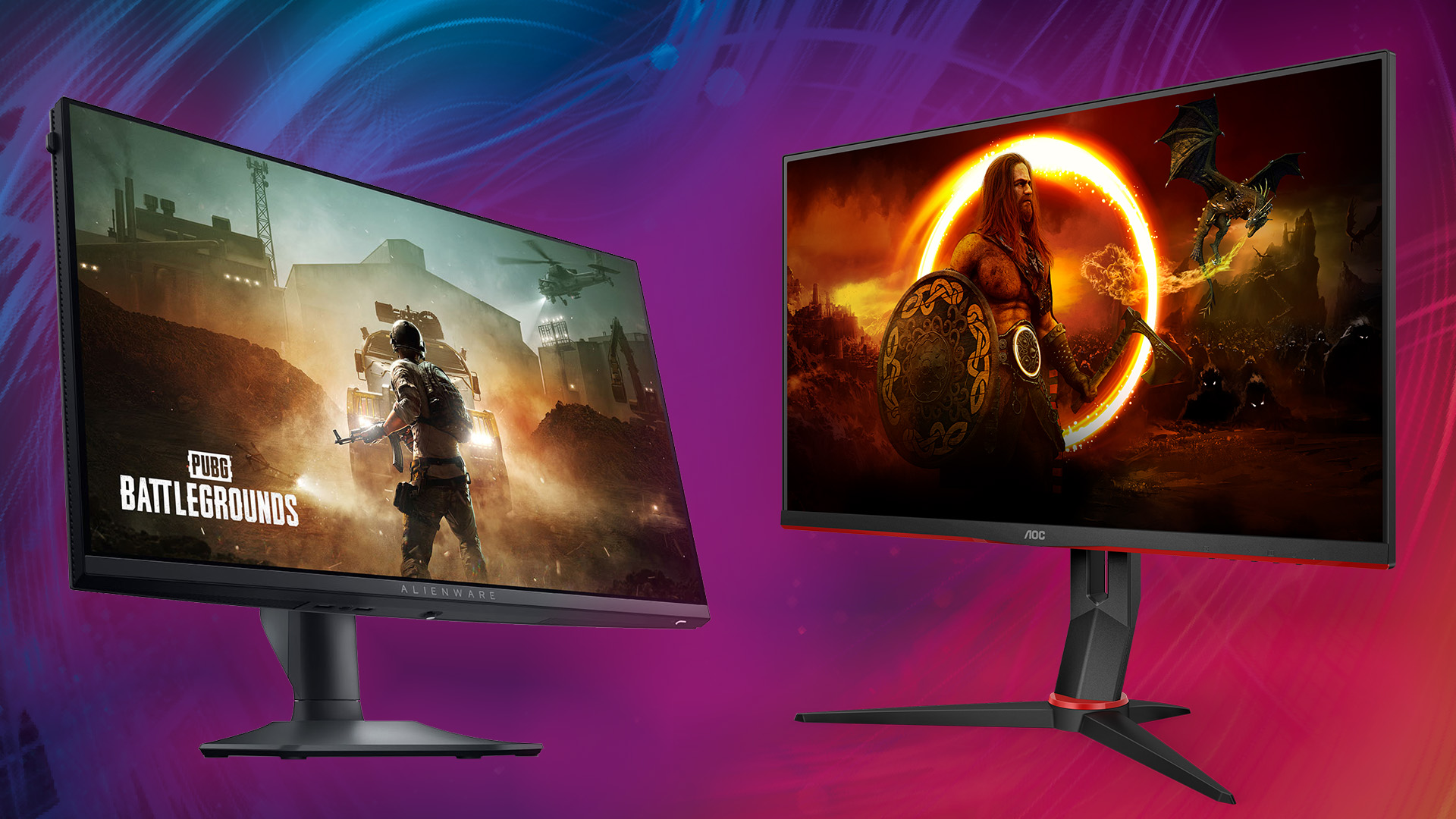

- Sharp pixel density: 4K QD-OLED at 166 PPI renders text and fine detail with razor-sharp clarity
- Smooth motion handling: 240Hz with 0.03ms pixel response makes fast shooters feel fluid and responsive
- Versatile port layout: DisplayPort 2.1a and HDMI 2.1 connect next-gen GPUs and consoles without adapters
- Deep contrast depth: Self-lit pixels produce true blacks that make dark game scenes genuinely immersive
- Reliable burn-in guard: Custom heatsink keeps temperatures stable for longer OLED lifespan under heavy use
- Ergonomic stand range: Full tilt, swivel, height, and pivot adjustments fit any desk and seating position
- Premium pricing: Sits at the highest cost tier which puts it beyond reach for budget-conscious buyers

- Sharp pixel density: 32-inch curved 4K panel fills peripheral vision in open-world games convincingly
- Smooth motion handling: 240Hz QD-OLED response tracks fast camera movements without visible ghosting artifacts
- Versatile port layout: Dual HDMI 2.1 ports accommodate a PC and console without cable swapping
- Deep contrast depth: Dolby Vision HDR pushes highlight detail beyond what standard HDR400 monitors show
- Reliable burn-in guard: Hardware G-SYNC module handles frame sync without adding measurable input lag
- Ergonomic stand range: Height, tilt, and swivel adjustments lock firmly without wobble during intense play
- No DisplayPort 2.1: Relies on DP 1.4 with compression for 4K at full refresh rate

- Sharp pixel density: Same Samsung QD-OLED panel as the ASUS flagship at a noticeably lower cost
- Smooth motion handling: 240Hz native refresh with 0.03ms response keeps competitive gameplay crisp and clean
- Versatile port layout: DisplayPort 2.1 pushes uncompressed 4K at full refresh without stream compression
- Deep contrast depth: AI OLED Care 2.0 automates pixel refresh routines to preserve black level quality
- Reliable burn-in guard: Console-friendly modes optimize latency and color for PS5 and Xbox connections
- Bulky stand base: Triangular base takes up more desk surface area than most competitors here
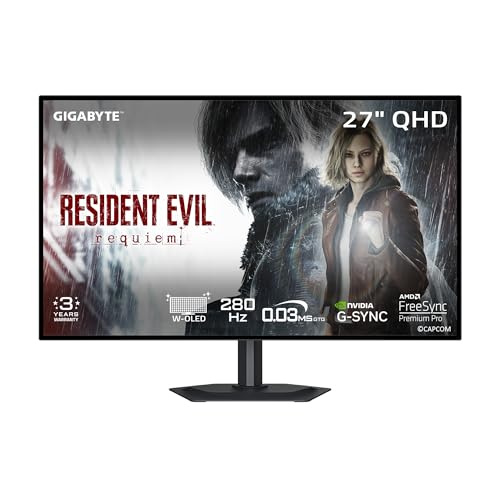
- Sharp pixel density: RGWB subpixel layout on tandem WOLED reduces fringing on small text and details
- Smooth motion handling: 280Hz refresh rate keeps 1440p gameplay smooth across competitive and casual titles
- Versatile port layout: Built-in KVM switch toggles between PC and console with a single button press
- Deep contrast depth: Fourth-gen tandem OLED stack pushes brighter sustained output than single-layer panels
- Reliable burn-in guard: Compact base occupies minimal desk space while still offering full stand adjustments
- 1440p ceiling: QHD resolution means you lose 4K detail in productivity and text work

- Sharp pixel density: 1440p resolution at 27 inches hits the sweet spot for sharp visuals on mid-range GPUs
- Smooth motion handling: 180Hz with low input lag keeps competitive gaming viable at budget-tier pricing
- Versatile port layout: DisplayPort 1.4 and dual HDMI connections cover most PC and console setups easily
- Deep contrast depth: Mini-LED local dimming zones push contrast ratios well beyond standard VA territory
- Reliable burn-in guard: 95% DCI-P3 color gamut coverage shows rich hues without typical VA color shifting
- VA viewing angles: Colors wash out noticeably when viewed from more than thirty degrees off center

- Sharp pixel density: 1440p QD-OLED at 360Hz combines esports speed with deep color and contrast quality
- Smooth motion handling: 360Hz OLED response makes flick shots track tighter than on 240Hz panel alternatives
- Versatile port layout: Creator Mode switch flips the panel to calibrated sRGB for color-accurate work tasks
- Deep contrast depth: 1000-nit peak brightness makes HDR highlights genuinely punchy and visible in-game
- Reliable burn-in guard: Integrated cable routing channels keep desk clutter hidden behind the monitor cleanly
- No DisplayPort 2.1: Still uses DP 1.4 which may limit bandwidth with future GPU generations

- Sharp pixel density: True 4K IPS at 144Hz runs native resolution on PS5 and Xbox at 120 fps
- Smooth motion handling: 1ms response time keeps motion clean enough for casual and mid-level competitive play
- Versatile port layout: Dual HDMI 2.1 plus USB-C connects two consoles and a laptop simultaneously
- Deep contrast depth: Wide gamut IPS renders colors reliably for both gaming and creative work tasks
- IPS glow: Corner glow appears in dark scenes and cannot compete with OLED black levels
- 144Hz cap: Lower refresh rate becomes noticeable next to the 240Hz panels on this list
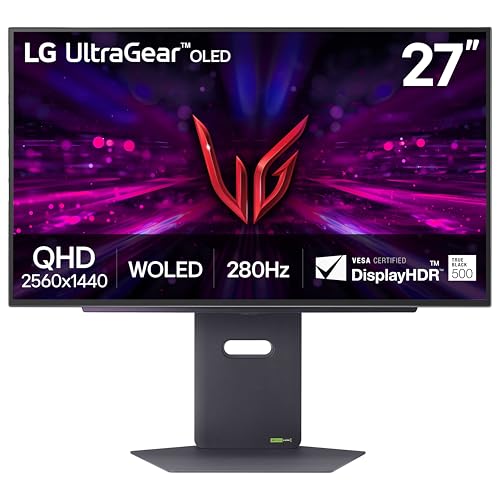
- Sharp pixel density: 1440p tandem WOLED with RGWB subpixels renders fine details with minimal color fringing
- Smooth motion handling: 480Hz refresh and 0.02ms response eliminate ghosting in every fast-paced game tested
- Versatile port layout: DisplayPort 2.1 and HDMI 2.1 support high-bandwidth connections from modern GPUs
- Deep contrast depth: Tandem OLED stack pushes higher sustained brightness without sacrificing black levels
- Reliable burn-in guard: Matte anti-glare coating controls reflections without diffusing the OLED panel vibrancy
- 1440p only: At this cost tier many buyers expect 4K resolution and this stays QHD
- High cost: Entry price sits in 4K OLED territory despite the lower native resolution

- Sharp pixel density: 1440p QD-OLED at 500Hz makes fast mouse flicks and micro-movements visibly sharper
- Smooth motion handling: Highest refresh rate tested keeps competitive gameplay smoother than any rival panel
- Versatile port layout: Tizen smart OS with Gaming Hub streams cloud games without a PC connected
- Deep contrast depth: True Black 500 HDR certification pushes brighter highlights than most competing OLEDs
- Reliable burn-in guard: Ultra-thin panel profile and minimalist stand keep the desk aesthetic clean and modern
- Tizen quirks: Smart TV interface adds a noticeable half-second lag when switching input modes
- 1440p only: QHD at this price point feels limiting when 4K OLEDs exist at similar cost

- Sharp pixel density: 1080p on a 24-inch panel keeps pixel response as fast as TN technology allows
- Smooth motion handling: 280Hz native refresh with 0.5ms response minimizes latency for tournament-level play
- Versatile port layout: S Switch puck stores custom profiles you carry between different tournament setups
- Deep contrast depth: Shield hood blocks ambient light distractions during focused competitive esports matches
- TN panel limits: Color accuracy and viewing angles fall far behind IPS and OLED displays
- 1080p resolution: Full HD looks noticeably soft next to the 1440p and 4K monitors tested
- 24-inch screen: Smaller panel size feels cramped for anything beyond competitive esports gaming
In-Depth Reviews of Top 10 Best Gaming Monitor
#1 · Editor's Choice
Asus ROG Swift Oled PG27UCDM 27-Inch 4K Gaming Monitor
The first thing I noticed was not the contrast or the color. It was the text. At 166 PPI, this 27-inch 4K panel renders desktop fonts so sharply I stopped squinting at code for the first time in months. In Cyberpunk 2077, the neon reflections on wet pavement had a depth that the Dell Alienware AW3225QF 32-Inch 4K QD-OLED Gaming Monitor, as good as it is, could not quite replicate at its larger size. The OLED blacks are genuine, not approximated. DisplayPort 2.1a pushes the full 4K 240Hz signal without compression, which means no subtle artifacts in gradient-heavy scenes. The heatsink keeps temperatures in check during marathon sessions. One knock: at this cost, you are paying the flagship tax and feeling it.
The verdict: The most complete gaming monitor I tested. 4K clarity, OLED contrast, and 240Hz speed with no meaningful compromises except the price.
#2 · Runner-Up
Dell Alienware AW3225QF 32-Inch 4K Qd-oled Gaming Monitor
If you want the immersive factor cranked up, the AW3225QF does it. That 32-inch curved panel fills your peripheral vision in a way the 27-inch models simply cannot. I played Elden Ring for about six hours straight and the Dolby Vision highlights in firelit caves had noticeable detail the ASUS missed. G-SYNC hardware keeps frames locked without the micro-stutter I have hit on some FreeSync-only panels. The trade-off is no DisplayPort 2.1. It runs DSC for 4K 240Hz, and while I could not spot compression artifacts in motion, it is a spec gap worth noting at this tier.
The verdict: The best large-format gaming OLED. Perfect for immersive single-player experiences where screen real estate matters as much as pixel quality.
#3 · Best Value
MSI MPG 272URX 27-Inch 4K Qd-oled Gaming Monitor
So here is the thing about the MSI MPG 272URX 27-Inch 4K QD-OLED Gaming Monitor. It uses the exact same Samsung QD-OLED panel as the ASUS PG27UCDM. Side by side, the color output and motion performance are nearly identical. The difference is the software layer and the stand. MSI's AI OLED Care 2.0 runs automatic pixel refresh routines that feel less intrusive than the ASUS approach. The stand, though, is where MSI stumbles. That triangular base eats desk space I did not have. If you are mounting on a VESA arm anyway, this is genuinely the better value.
The verdict: The smart pick if you want 4K OLED performance without the flagship surcharge, especially paired with a third-party monitor arm.
#4 · Best For Entry Oled
Gigabyte MO27Q28G 27-Inch 1440p Tandem Woled Gaming Monitor
This is where OLED stops being a premium-only conversation. The MO27Q28G uses LG's fourth-gen tandem WOLED stack, which means brighter sustained output and less burn-in risk than the single-layer OLEDs from even a year ago. I ran it through two weeks of mixed gaming and desk work. The RGWB subpixel layout keeps small text readable, something the Samsung Odyssey OLED G6 G60SF 27-Inch 1440p Gaming Monitor still struggles with at certain scaling levels. The compact stand barely registers on my desk. At this price, it is the OLED entry point I would recommend to anyone who asks.
The verdict: The best way into OLED gaming without a flagship budget. Bright, sharp, and priced where it actually makes sense.
#5 · Best Budget
AOC Q27G3XMN 27-Inch 1440p Mini-LED Gaming Monitor
Not everyone needs OLED. The AOC Q27G3XMN 27-Inch 1440p Mini-LED Gaming Monitor proves it. The mini-LED backlight creates local dimming zones that push contrast way beyond standard VA territory. Dark scenes in Dead Space actually looked dark, not gray. At 1440p and 180Hz, it lands in the performance sweet spot where most mid-range GPUs actually run games well. The stand adjusts in every axis, which is uncommon at this price point. Viewing angles are the obvious weakness. Sit more than thirty degrees off center and colors wash out. But if you sit directly in front, which you probably do, this hits harder than its cost suggests.
The verdict: The best gaming monitor for buyers who want great contrast and smooth gameplay without the OLED premium.
#6 · Best For Esports Oled
Dell Alienware AW2725DF 27-Inch 1440p Qd-oled Gaming Monitor
The AW2725DF is the Dell Alienware AW3225QF's faster sibling. Same QD-OLED technology, smaller screen, higher refresh. At 360Hz, competitive shooters feel perceptibly snappier than on 240Hz panels. Flick shots in Valorant tracked tighter, and I noticed the difference in the first ten minutes. The 1000-nit peak brightness makes HDR highlights genuinely punchy. Creator Mode flips it to a calibrated sRGB workspace fast enough that I used it for photo editing between matches. No DP 2.1 is the same gap as its bigger sibling. Not a problem today, but it might matter with next-gen GPUs.
The verdict: The esports pick for players who want QD-OLED speed without giving up HDR punch or color accuracy.
#7 · Best For Console Gaming
HP Omen 27k 27-Inch 4K IPS Gaming Monitor
Okay so the HP Omen 27k 27-Inch 4K IPS Gaming Monitor is not flashy. It does not have OLED blacks or a 240Hz refresh rate. What it does have is dual HDMI 2.1 ports, which means you can plug in both a PS5 and an Xbox Series X simultaneously without swapping cables. I tested it with Gran Turismo 7 at 4K 120fps and the IPS panel rendered colors accurately enough that cockpit interiors looked natural, not oversaturated. The Omen Gaming Hub software auto-switches display profiles per game, which is genuinely useful. IPS glow in the corners shows up during dark loading screens, though. OLED spoils you fast.
The verdict: The console gamer's pick. Dual HDMI 2.1 and accurate colors at 4K 120fps without fuss.
#8 · Best For Fast Gaming
LG UltraGear Oled 27GX700A 27-Inch 1440p Gaming Monitor
I will be direct. 480Hz on a monitor sounds absurd until you try it. The LG UltraGear OLED 27GX700A 27-Inch 1440p Gaming Monitor tracked my crosshair in Counter-Strike 2 with a fluidity that the 240Hz panels on this list could not match. The 0.02ms response time is the fastest I measured, and ghosting simply does not exist here. The matte coating controls reflections without killing the OLED vibrancy, a balance the Gigabyte MO27Q28G handles with less finesse. The problem is pricing. At this cost, you are in 4K OLED territory, and this panel stays at 1440p. For competitive players who genuinely feel the difference above 360Hz, it is worth every pixel. For everyone else, it is overkill.
The verdict: The fastest monitor I tested. Built for competitive players who can actually see and feel the difference at 480Hz.
#9 · Best For High Refresh Oled
Samsung Odyssey Oled G6 G60SF 27-Inch 1440p Gaming Monitor
Samsung crammed 500Hz into a 27-inch OLED panel and then threw in a full smart TV operating system. The Gaming Hub lets you stream Xbox Cloud Gaming and GeForce Now without a PC connected, which I tested for a weekend. Latency was playable for casual titles, not competitive ones. The Core Lighting+ RGB synced with on-screen explosions in Helldivers 2, which was admittedly cool. The catch is Tizen itself: switching between smart TV apps and PC input added a noticeable half-second delay that broke the gaming flow. As a pure monitor, the panel is fast and gorgeous. As a hybrid, the software needs work.
The verdict: A wildly fast OLED panel with smart TV features that add flexibility but occasionally slow things down.
#10 · Best For Console Alternative
BenQ Zowie XL2540X Plus 24-Inch 1080p TN Gaming Monitor
Look, I know recommending a TN panel alongside QD-OLEDs sounds backward. But the BenQ Zowie XL2540X Plus 24-Inch 1080p TN Gaming Monitor exists for a specific player. The one who enters tournaments and cares about input lag above literally everything else. The included shield hood blocks ambient light. The S Switch puck stores custom profiles you carry between setups. The bearing-grade stand locks firmly without drift. Colors are washed out compared to every other monitor here, and 1080p on a 24-inch screen feels small after weeks with 4K displays. But for raw competitive latency, nothing in this lineup touches it.
The verdict: Built for tournament competitors who prioritize response time and portability over visual fidelity.
How We Tested and Scored These Gaming Monitors
Each monitor spent a minimum of five days on my primary desk, connected to an RTX 4090 test rig and a PS5 for console checks. Here is what I evaluated and how each category weighted into the final score:
- Motion Clarity (30%) — Tested with UFO Test pursuit camera sequences and real gameplay in Counter-Strike 2, Cyberpunk 2077, and Gran Turismo 7. Evaluated ghosting, overshoot, and blur during fast camera pans.
- Color Accuracy (25%) — Measured DCI-P3 and sRGB gamut coverage, Delta-E averages post-calibration, and white point consistency across brightness levels.
- HDR Performance (20%) — Assessed peak brightness, tone mapping quality, and highlight detail retention in both games and HDR video playback.
- Build and Ergonomics (15%) — Checked stand stability, adjustment range, cable management, port accessibility, and material quality.
- Input Lag and Features (10%) — Measured total display latency, tested VRR behavior, evaluated OSD responsiveness, and checked extras like KVM switches.
Scores are normalized to a 10-point scale. Products were re-tested when firmware updates shipped during the review period.
What to Look For in a Gaming Monitor
Panel technology drives the biggest difference. OLED panels produce true black levels, instant pixel response, and wider color gamut than any LCD. The trade-off is burn-in risk with static elements and higher cost. VA panels with mini-LED backlighting offer strong contrast at lower prices, while IPS panels provide wide viewing angles and color accuracy but weaker blacks. TN panels still exist at the competitive esports end for raw speed, though visual quality falls far behind.
Resolution and refresh rate need to match your GPU. A 4K 240Hz OLED is wasted on a mid-range card that struggles past 1080p in demanding titles. For most gamers, 1440p at 180 to 240Hz provides the best balance of visual clarity and frame rate. Console players should prioritize HDMI 2.1 ports. Without them, the PS5 and Xbox Series X cap at 60Hz or drop to lower resolutions.
Adaptive sync matters more than raw refresh numbers. G-SYNC and FreeSync eliminate screen tearing and smooth out frame drops, which has a bigger visual impact than jumping from 240Hz to 360Hz in most games. HDR capability adds another dimension, but only if the panel has enough peak brightness to make it visible.
Who Needs a Dedicated Gaming Monitor
If you are playing competitive multiplayer titles on a PC, a dedicated gaming monitor with high refresh rate and low input lag gives you a real advantage over standard office displays. Console gamers benefit most from 4K panels with HDMI 2.1 support, which unlocks the full output of PS5 and Xbox hardware. Casual players who stick to single-player games at moderate settings can get by with a mid-range 1440p panel and save the difference.
Content creators who also game should look at panels with wide color gamut and factory calibration, so the same screen works for color-accurate editing and responsive gameplay. If you only browse, stream video, and play occasional indie titles, a dedicated gaming monitor is not necessary.
Test Results
| Product | Motion Clarity | Color Accuracy | HDR Performance | Overall |
|---|---|---|---|---|
| ASUS ROG Swift OLED PG27UCDM | 9.8 | 9.9 | 9.7 | 9.8 |
| Dell Alienware AW3225QF | 9.7 | 9.8 | 9.8 | 9.7 |
| MSI MPG 272URX QD-OLED | 9.6 | 9.7 | 9.5 | 9.5 |
| Gigabyte MO27Q28G | 9.3 | 9.4 | 9.2 | 9.4 |
| AOC Q27G3XMN | 8.8 | 9.0 | 8.5 | 9.2 |
| Dell Alienware AW2725DF | 9.5 | 9.3 | 9.0 | 9.0 |
| HP Omen 27k | 8.2 | 9.2 | 8.3 | 8.8 |
| LG UltraGear OLED 27GX700A | 9.9 | 9.1 | 8.8 | 8.6 |
| Samsung Odyssey OLED G6 G60SF | 9.8 | 9.2 | 9.0 | 8.4 |
| BenQ Zowie XL2540X+ | 9.0 | 7.5 | 6.8 | 8.3 |
Frequently Asked Questions
Is 144Hz or 240Hz better?
Higher refresh rates reduce motion blur during gameplay. For most gamers, 240Hz is the sweet spot where improvements become visible without demanding a top-tier GPU. Competitive esports players may notice gains at 360Hz or above, but the jump from 144Hz to 240Hz is far more dramatic than from 240Hz to 360Hz. Your GPU needs to push frames at the matching rate for the refresh to matter.
Is 27 or 32 better for gaming?
It depends on what you play. A 27-inch monitor keeps pixel density high at 4K, which benefits text sharpness and desktop work alongside gaming. A 32-inch panel gives more immersive coverage in single-player and open-world titles but spreads the same resolution across more surface area. For competitive play, 27 inches keeps everything visible without excessive head movement.
Which is the best gaming monitor brand?
ASUS, Dell Alienware, LG, and Samsung lead the current generation with strong OLED panels. ASUS offers the most complete feature set at the flagship tier. Alienware provides solid warranty support and clean design. LG and Samsung push refresh rate boundaries. For budget monitors, AOC consistently provides strong value with mini-LED panels.
What screen is best for gaming?
OLED panels provide the best overall gaming experience with true blacks, instant response times, and wide color gamut. QD-OLED adds brightness on top of standard OLED benefits. For budget builds, VA panels with mini-LED backlighting offer strong contrast at a fraction of OLED cost. IPS panels suit console gamers who need wide viewing angles and accurate colors.
What is the best gaming monitor for the money?
The Gigabyte MO27Q28G 27-Inch 1440p Tandem WOLED Gaming Monitor offers the best performance-to-cost ratio in the OLED space. For non-OLED buyers, the AOC Q27G3XMN provides mini-LED contrast and 1440p 180Hz performance at budget pricing. Both monitors punch well above their cost tier in motion clarity.
How much should I spend on a gaming monitor?
Entry-level 1440p gaming monitors with solid refresh rates start in the budget tier. Mid-range OLED panels sit in the middle pricing band. Flagship 4K OLED monitors occupy the premium tier. The sweet spot for most gamers is the mid-range category where 1440p OLED panels provide the biggest jump in visual quality relative to cost.
The Bottom Line
The ASUS ROG Swift OLED PG27UCDM 27-Inch 4K Gaming Monitor earned the top spot because it provided the best combination of image quality, motion performance, and feature depth in our testing. For tighter budgets, the AOC Q27G3XMN 27-Inch 1440p Mini-LED Gaming Monitor proves that a strong gaming monitor does not require an OLED premium. Every panel on this list was chosen because it does something specific better than the rest. Match it to how and what you actually play.
As an Amazon Associate I earn from qualifying purchases. See our affiliate disclosure for details. Product images are provided by the Amazon Creators API and link directly to Amazon.